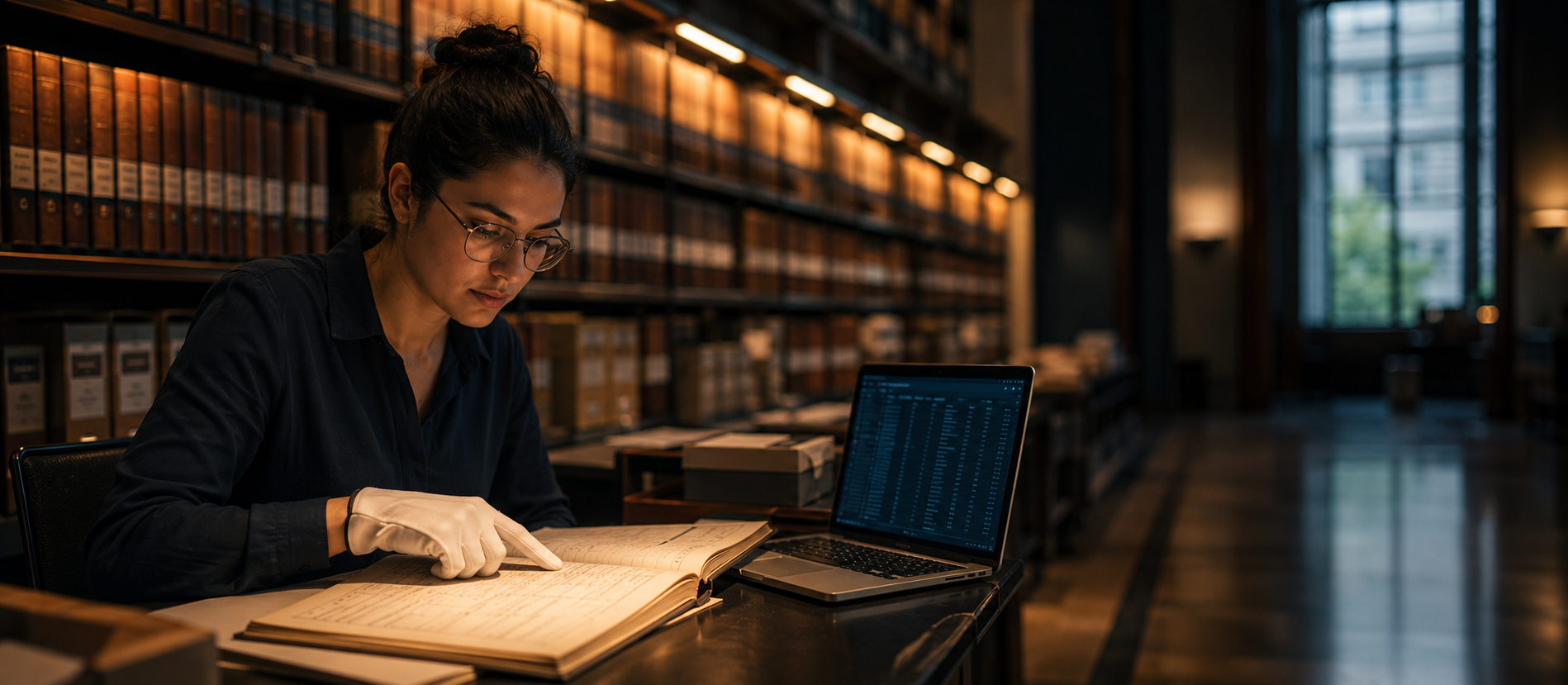

Imagine walking into your county’s public records office and asking to see the full history of every property sale on a particular street – every price paid, every owner, every date, going back decades. The clerk hands you the file. No appointment needed. No credentials required. It’s all public. That’s exactly what a block explorer does for cryptocurrency. Every transaction, every wallet balance, every smart contract interaction – it’s all sitting in an open ledger, and a block explorer is the counter where anyone can walk up and start reading.
The Public Records Office, Explained
A block explorer is a free, browser-based tool that gives you a human-readable window into a blockchain’s raw data. Because blockchains are public and decentralized by design, every transaction that has ever occurred on a given network is permanently recorded and visible to anyone – but that raw data isn’t easy to parse on its own. A block explorer is the interface that makes it searchable. Think of the blockchain as the county archive room stacked floor-to-ceiling with folders; the block explorer is the index system and the librarian rolled into one.
According to Gemini’s Cryptopedia, block explorers provide a transparent, searchable database for all transactions that have taken place on a blockchain and show how much crypto is owned by specific wallet addresses – all without requiring any special software or credentials to access.
What You Can Look Up (And What You’ll Find)
Back at the records office, once you pull a property file, you can see the parcel ID, the chain of ownership, the sale price each time it changed hands, any liens filed against it, and the exact date each document was recorded. A block explorer hands you the same level of detail – just for on-chain activity instead of real estate.
Paste a wallet address into a block explorer and you’ll immediately see its current balance, its complete transaction history, every token it holds, and any smart contract interactions it has made. Paste a transaction hash – the unique ID assigned to every transfer – and you’ll see the sender address, the recipient address, the amount moved, the network fee paid, the exact block it was confirmed in, and the timestamp. Etherscan’s own documentation describes the tool as a search engine for the blockchain: type in what you’re looking for, get back everything the network recorded about it.
You can even inspect smart contracts directly – reading their code, seeing which wallets have interacted with them, and tracking token minting, burning, staking, and swap events in granular detail. If you want to understand what’s happening on a chain, a block explorer is where you start. Salvorias users can explore on-chain activity directly through the Salvorias block explorer, purpose-built for the SAV network.
The Deed Is Public – The Owner Might Not Be
Here’s where the property records analogy does something useful that most crypto explainers miss. In a county records office, the deed is completely public – but the deed lists the owner’s legal name. Anyone can look up who owns 412 Maple Street. On a blockchain, the “deed” (the transaction record) is equally public – but the owner is identified only by a wallet address, a long string of letters and numbers like 0x4a3b.f9c2. There’s no name attached unless the owner links it themselves.
This is the real nature of crypto “privacy.” It isn’t that transactions are hidden – they aren’t. Every transfer is permanently visible to every block explorer on earth, forever. The privacy comes from pseudonymity: your on-chain identity is your wallet address, not your name. The moment you connect your wallet to a KYC exchange, post it publicly, or send funds to an identified address, that pseudonymity starts to erode. Blockchain analytics firms specialize in exactly this kind of chain-tracing. The ledger itself never forgets a transaction.
Understanding this distinction matters whether you’re a casual user checking a transfer or a developer building on-chain. For a deeper look at how the Salvorias ecosystem handles transparency at the infrastructure level, the platform features overview is a good starting point.
How to Actually Use One
Using a block explorer requires no account, no login, and no fee. For Bitcoin, Blockchain.com is the longest-standing option. For Ethereum and EVM-compatible chains, Etherscan is the standard. For Solana, users reach for Solscan. Each major blockchain either has its own official explorer or a well-maintained community one.
The workflow is straightforward. You paste whatever you’re searching – a wallet address, a transaction hash, a block number, or a smart contract address – into the search bar and hit enter. Within seconds you’re looking at a full record. As CoinLedger’s guide to block explorers notes, the tool displays critical information including sender and recipient addresses, transaction amounts, gas fees, block confirmation count, and timestamps – everything you’d want to verify a transfer or audit an address.
Common practical uses: confirming that a transfer actually went through before assuming it’s stuck, verifying a wallet balance before sending a large payment, checking whether a smart contract has been audited or interacted with by known addresses, and tracking token movements across wallets. There’s also a good take on how on-chain mechanics connect to real trading behavior from the team at an alternative take worth reading.
Why This Matters Beyond Just Checking Transactions
The county records office exists because transparency in property ownership protects buyers, prevents fraud, and keeps the market honest. Nobody can secretly double-sell the same house because the deed is on file and anyone can check it. Block explorers serve the same function for decentralized finance. There is no central authority verifying that a DeFi protocol is doing what it claims – the block explorer is the audit trail. Anyone can verify that funds went where they were supposed to go, that a treasury wallet hasn’t been drained, or that a liquidity pool’s activity matches what was advertised.
This is what “trustless” actually means in blockchain contexts. You don’t need to trust the counterparty because you can verify the transaction yourself. That’s a meaningful shift from traditional finance, where you trust your bank’s statement because you have no direct access to the settlement records. On a public blockchain, the settlement record is the block explorer, and it’s open to everyone. Setting up a wallet to start participating is covered in the SAV Wallet Setup Guide.
The Records Office Never Closes
A county records office has hours. It has staff. It can be affected by budget cuts, natural disasters, or bureaucratic backlog. A block explorer has none of those constraints. The data it indexes is written into a distributed ledger maintained by thousands of nodes simultaneously. It doesn’t close at 5 PM. It doesn’t lose records in a flood. A transaction confirmed in 2009 on the Bitcoin network is as accessible today as one confirmed this morning.
That permanence is one of the most underappreciated features of public blockchains. When you use a block explorer, you’re not querying a database that someone controls – you’re reading from a record that exists in tens of thousands of places at once and can’t be altered retroactively by any single party. In a world where financial records can be manipulated, lost, or withheld, that’s a genuinely novel kind of infrastructure. The counter is always open. The records are always there. Walk up and look anytime.
This article is provided for educational purposes only and does not constitute financial, investment, legal, or tax advice. Digital asset markets involve risk and market conditions can change rapidly. Always conduct your own research and consult a qualified professional regarding your specific circumstances.